A warm fireplace may make a cold evening more comfortable, but chimney problems can make everything go awry within a matter of moments. From chimney fires to blocked flues, certain safety issues require immediate attention to protect your home and your family.
Here are five common chimney emergencies and what to do if one happens to you.
1. Chimney Fires
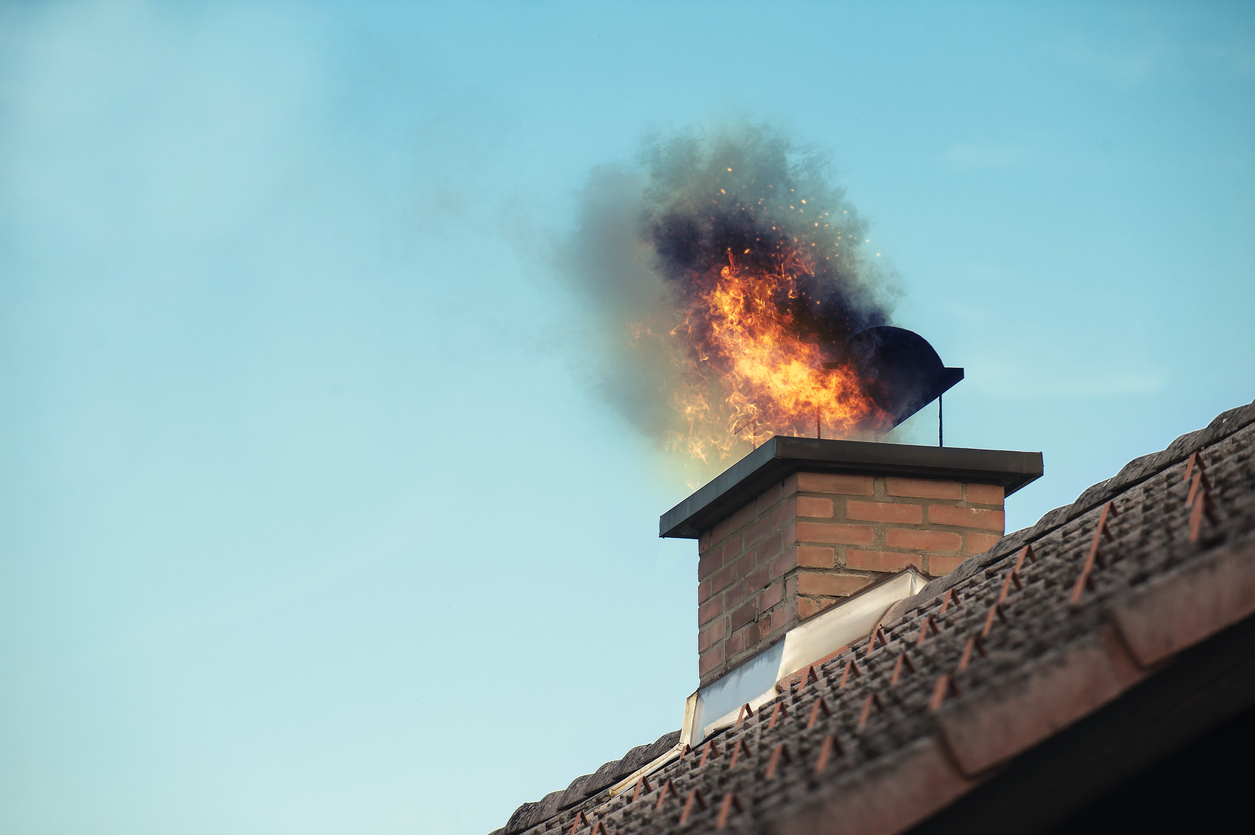
Creosote is a highly flammable byproduct of burning wood. Over time, it can build up inside a chimney. And without regular chimney cleaning and inspections, the creosote can ignite. You may recognize this by loud cracking or popping sounds, dense smoke, an intense burning smell, or flames and sparks coming from the chimney top.
What to do: Immediately get everyone out of the house and call 911. Never attempt to extinguish a serious chimney fire yourself or assume it has gone out because the flames are no longer visible. Do not use the fireplace again until it is thoroughly inspected by a professional who confirms it is safe.
2. Blocked Chimneys and Flues
A blocked flue can prevent smoke and dangerous combustion gases from escaping your home. Debris, leaves, animal nests, and even fallen pieces of masonry can lead to obstruction of the passage, which results in a potentially hazardous situation.
What to do: If smoke is backing up into the room, stop using the fireplace. If you suspect carbon monoxide exposure or you have a carbon monoxide detector that is sounding the alarm, evacuate the home immediately and call 911. Never try to investigate the situation yourself by climbing onto the roof.
Routine inspections can allow for obstructions to be removed before they pose a threat.
3. Carbon Monoxide Leaks
Carbon monoxide (CO) is an odorless, colorless gas that can be very deadly. A damaged chimney, blocked flue, or failed ventilation system can leave you exposed to this dangerous gas. Symptoms may include headaches, dizziness, nausea, and confusion.
What to do: Again, if you suspect the presence of CO or your alarm for it is sounding, get everyone out of your home right away, into the fresh air. This includes pets. Do not re-enter the home at all until you receive the all-clear from first responders.
Being proactive in your chimney maintenance can keep the venting system functioning as intended.
4. Damaged Chimneys and Masonry
Believe it or not, the health of your chimney can have a big impact on how well and safely it is to use your fireplace. Cracked bricks, crumbling mortar, leaning chimney structures, and loose masonry can all signal deterioration. Severe damage following a storm or another sudden event may create a sudden hazard to both people and property.
What to do: Stay away from the damaged area, both inside and outside the home. If the chimney appears unstable or masonry is actively falling, evacuate the area. If there is immediate danger, call 911. Do not climb onto the roof or attempt any temporary repairs yourself.
Always invest in chimney inspections and repair services to assess structural damage.
5. Sudden Smoke or Fumes Inside Your Home
Smoke that enters your home rather than traveling up the chimney could indicate a blockage, a damaged flue, or inadequate draft. Strong, unusual fumes around a fireplace or gas unit also warrant attention and quick action.
What to do: Stop using the fireplace right away and move everyone away from the affected area. If the smoke is heavy, you suspect a fire, or someone is experiencing carbon monoxide exposure, evacuate and call 911. Never resume use until the chimney has been inspected and the cause identified and corrected.
Know When to Call for Emergency Chimney Service
Chimney issues are not always visible, and waiting to address them can put you at risk. At Chimney Sweepers, LLC, we recommend annual inspections and cleaning to identify any potential hazards before they become emergencies.
Schedule your service before the temperatures drop.
Frequently Asked Questions
What is the most dangerous chimney emergency?
A chimney fire or carbon monoxide exposure can be life-threatening. Both require immediate action.
Can we use our fireplace after a chimney fire?
No. Even if the fire appears to be out, it may have caused damage within the chimney. Have the entire system professionally inspected and cleared for its next use.
How do we know if our chimney is blocked?
Warning signs include smoke entering the room, poor draft, unusual odor, or visible debris. Note that some obstructions are hidden, so a professional inspection is recommended.
How often should we have our chimney inspected?
We recommend an inspection at least once a year, even if it is barely used.
Who should we call for an emergency chimney problem?
Call 911 first if there is a fire, suspected carbon monoxide exposure, or any other immediate threat to safety. For an urgent chimney problem requiring professional assessment or repair, contact us right away at (914) 437-5333. We are available 24/7.
At Chimney Sweepers, LLC, we help homeowners throughout Westchester County and surrounding areas keep their chimneys and fireplaces safe with professional cleaning, inspections, repairs, and emergency services. If you are experiencing an issue or want to prevent one, contact us today.